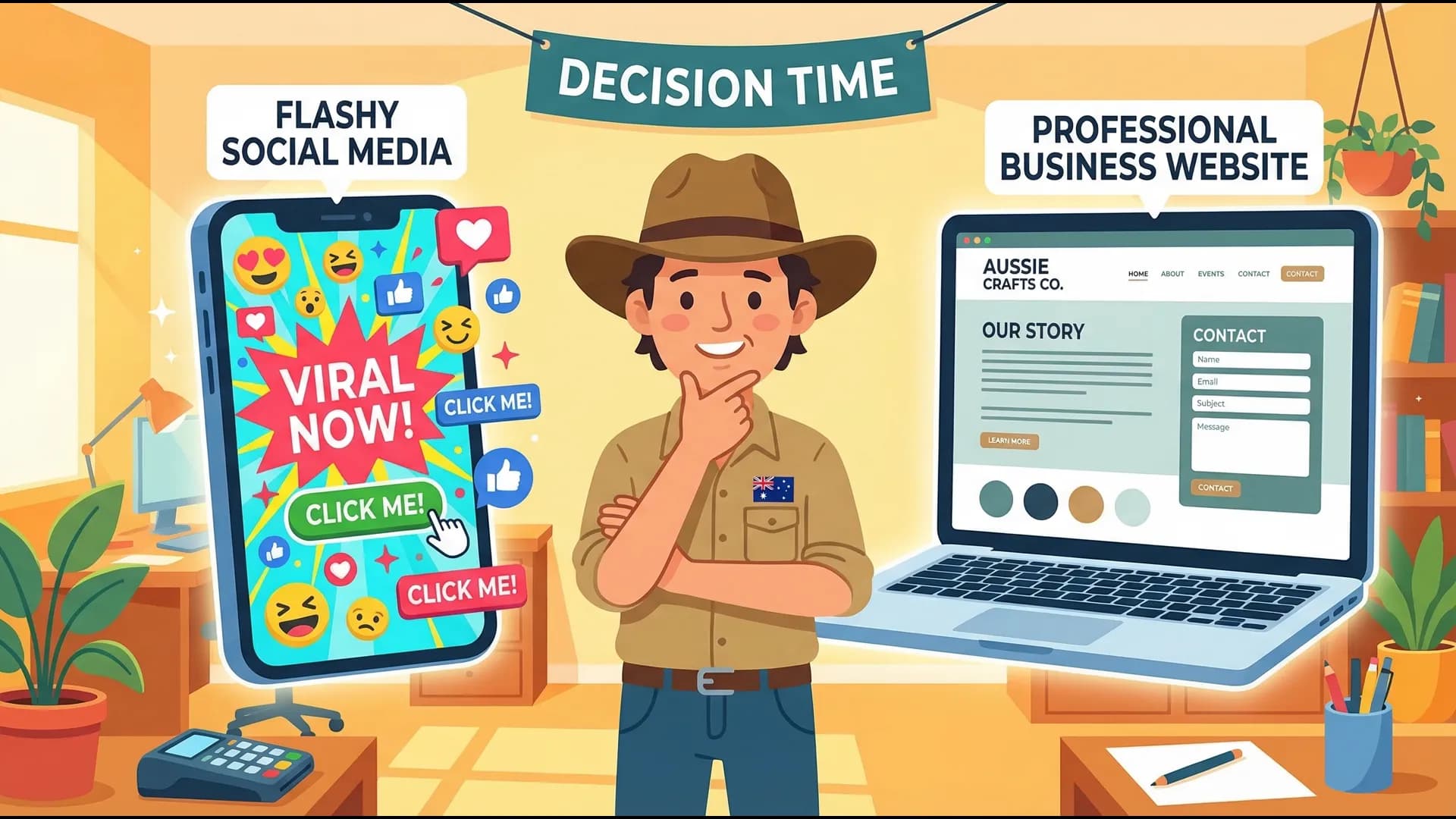
Website vs. Social Media — What Actually Works for Local Business
Facebook, Instagram, a website — where should you put your energy? Here's the honest answer for Ipswich small businesses.

By Tunoa Johnson
I talk to local business owners all the time who are exhausted by the social media grind. They are posting every day, filming Instagram Reels, trying to figure out TikTok trends... and when I ask how many qualified leads it's actually generated this month, the answer is usually:
"Well... it's hard to measure."
Meanwhile, their actual website sits there, gathering digital dust with an outdated copyright date of 2021, because "I figured my Facebook page was enough."
Let's be brutally honest: You need both. But they serve fundamentally different purposes in the psychology of buying.
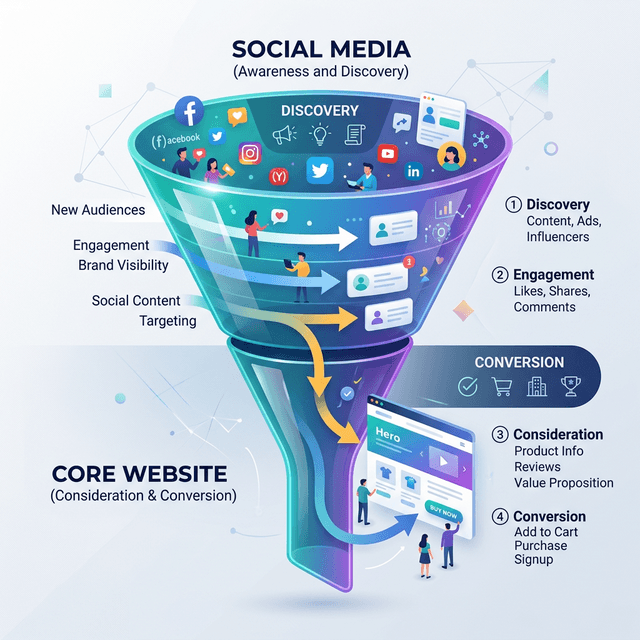
Think of it this way: Social media is the loud, crowded party where you shake hands and get attention. Your website is the quiet, professional office where you actually close the deal.
The Hard Truth About Social Media
Social media is fantastic for building awareness and humanizing your brand. But you have zero control.
Two years ago, a local bakery owner I know had built an Instagram following of 12,000 local foodies. It was her entire marketing strategy. Then, an algorithm change happened. Suddenly, her posts were only reaching 400 people. Her sales plummeted overnight.
When you build your business completely on social media, you are building a house on rented land.
- You don't own the audience: Facebook can change its algorithm, ban your account for a mistaken policy violation, or demand you pay to reach your own followers.
- It's not designed for research: When someone needs a hot water system replaced immediately, they do not go to TikTok. They go to Google.
- The lifespan of a post is hours: You spend an hour making a great Facebook post. By tomorrow, it's buried in the feed forever.
Why Your Website is Your Most Valuable Asset
Your website is the only piece of digital real estate you actually own and control 100%.
- It captures high-intent buyers: People searching Google for "Brisbane landscaper" have their credit cards out. They are looking to buy, not just scroll.
- It works 24/7/365: Your website doesn't clock off at 5 PM. It answers FAQs, processes bookings, and collects leads while you are asleep.
- You control the narrative: No competitor ads popping up next to your content. No distracting notifications. Just your brand, your proof, your offer.
- SEO builds compounding value: A well-written blog post on your website can bring in free traffic for years. A social media post lasts 24 hours.
The Smart "Hub and Spoke" Strategy
You shouldn't abandon social media. You should use it correctly.
Adopt the "Hub and Spoke" model. Your website is the Hub (the center of your universe). Your social profiles (Facebook, Instagram, LinkedIn) are the Spokes.
How to use Social Media (The Spokes):
- Share behind-the-scenes culture.
- Share quick wins, before-and-afters, and community involvement.
- CRITICAL: Use it to drive traffic back to your website.
How to use Your Website (The Hub):
- House your core service descriptions and pricing tiers.
- Host your long-form educational content (like this blog).
- Collect email addresses and phone numbers.
- Convert traffic into booked appointments or sales.
Never put all your eggs in Mark Zuckerberg's basket. Every social media post should have a purpose, and usually, that purpose is driving the user to click a link to your website where you control the environment.
Next Steps: Do an audit of your social media profiles today. Check the link in your bio—does it go straight to your website? Ensure every profile clearly points people to the place where they can actually buy from you.
Helpful next steps
Keep the momentum going
If this post helped, these are the most useful places to go next.

Tunoa Johnson
